Life Sequencer
Draw a pattern and watch pixel notes flourish or die, in a musical scale of your choice.
Microbe Beats
Simulated organisms are scanned by a playhead. Choose how fast they move, the drumkit sounds, and the BPM.
ASCII PORTRAIT
Use a webcam or upload an image to turn it into typography. Manipulate the tone with sliders and a curve.
Formats: JPG, PNG, WEBP
POSITION SUBJECT
CRANK THE AI
Type a prompt to make something stupid.
ADVANCED SETTINGS
Camera Collage
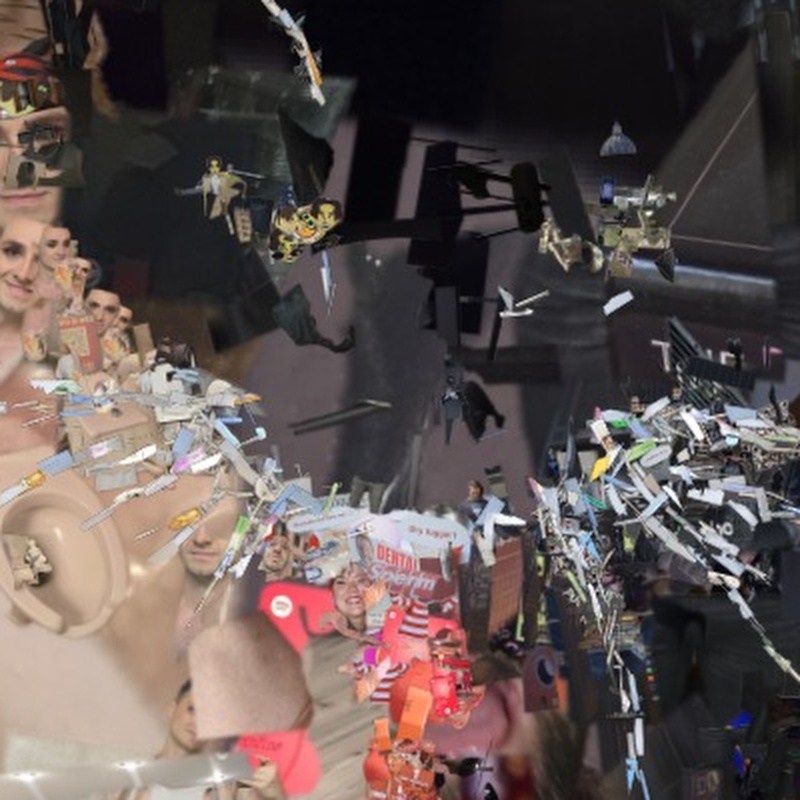
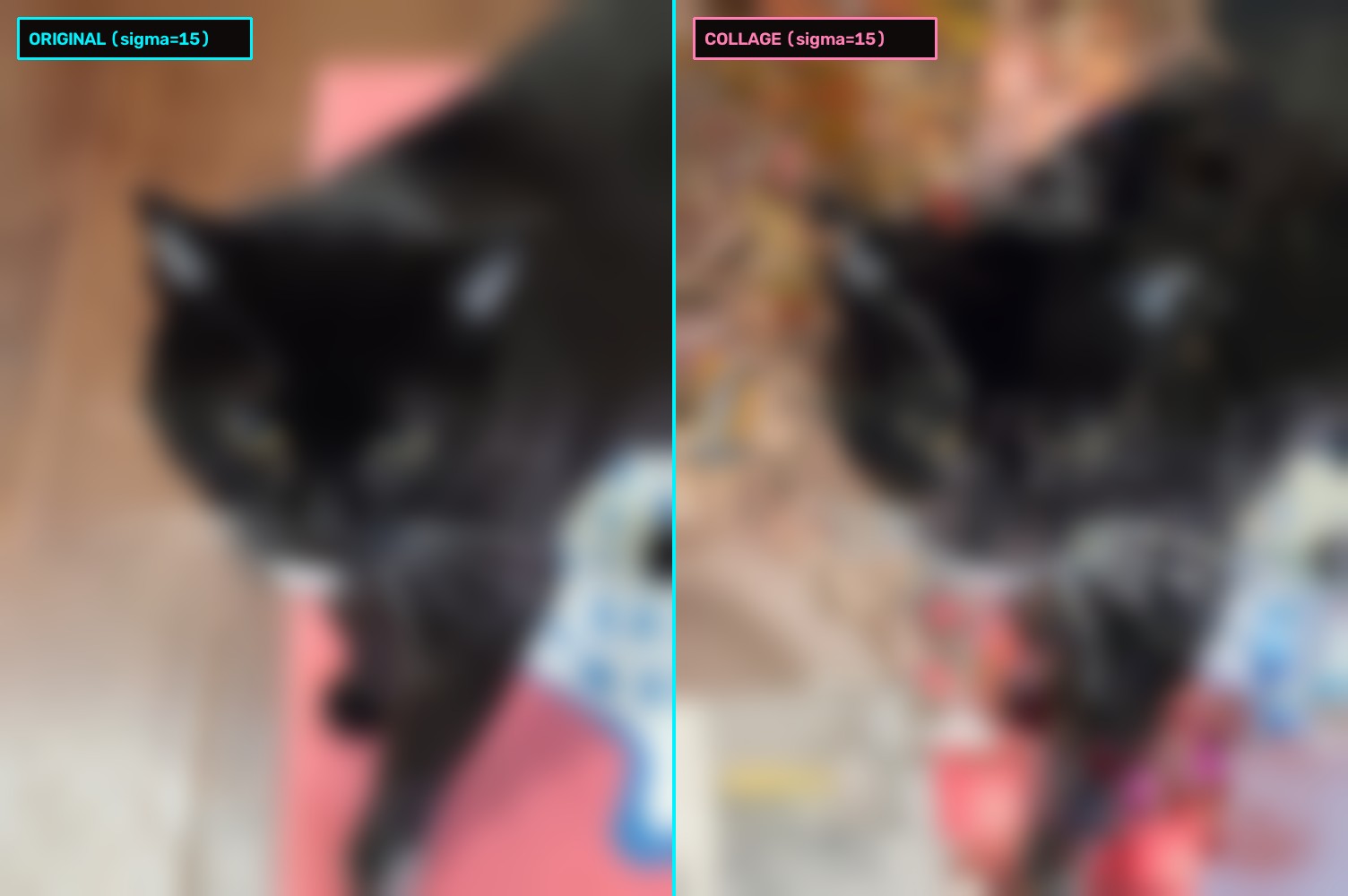
1,152 photos sampled from a 7,620-shot camera roll, 7,933 segmented objects cut out of them, and a 4-pass computer vision engine that rebuilds portraits out of my own digital junk drawer. Drag the slider, inspect the cutouts, or test the squint blur below.
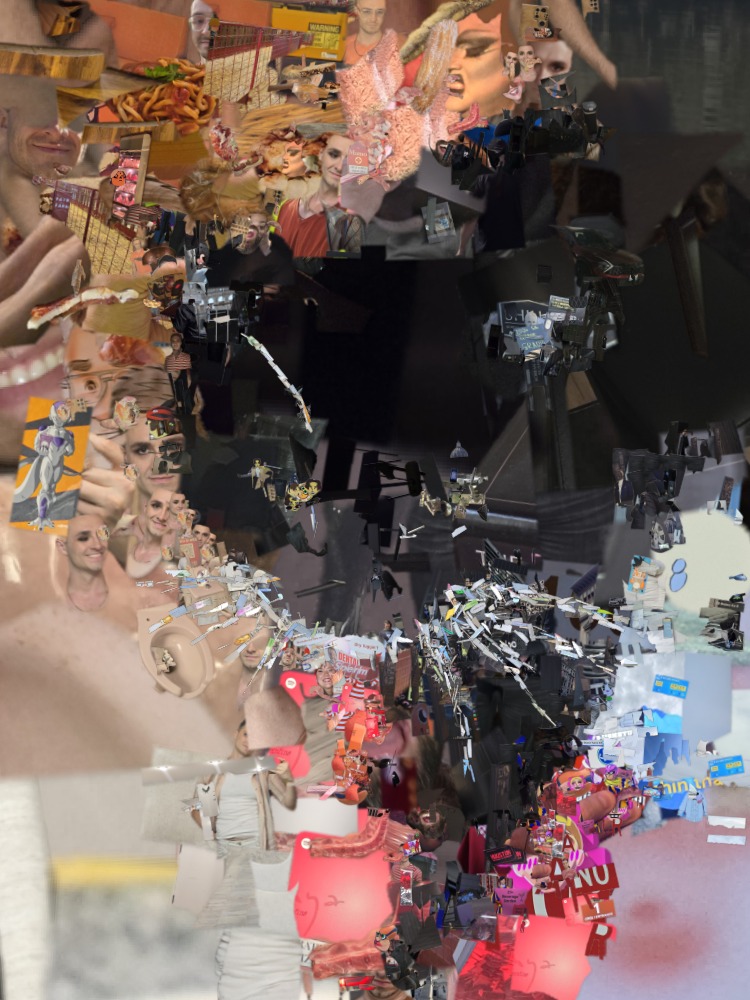 COLLAGE (MEMORY DUMP)
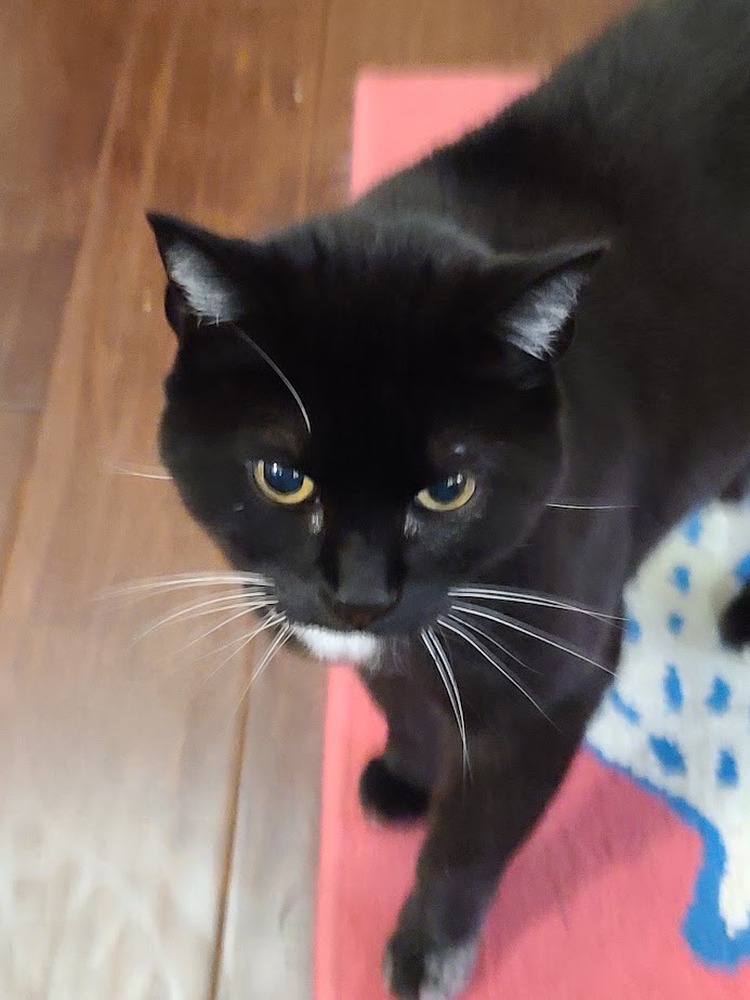 ORIGINAL PHOTO
The Premise: My Camera Roll as a Scrap Bin
Most digital photo mosaics cheat. They chop a portrait into a tiny grid of squares, match average colors against stock photos, and tint the whole image so it looks right from far away. Up close, none of the pieces have any actual shape or weight.
I wanted to see what happens when you build a cut-paper collage where the only allowed material is the uncurated junk drawer of my own phone.
Across my personal archives, I had 7,620 raw photos across three library vaults. If you segment every photo naively, you end up with 50,000 cutouts—half of which are the exact same sleeve in a 30-shot burst. So I sampled 1,152 unique photos using event-aware chronological striding to capture every costume change, road trip, and weird lighting setup without redundant bloat, yielding 7,933 segmented cutouts (~6.9 distinct objects per photo). That pool has everything: 2 AM memes, dive bar bathroom graffiti, accidental close-ups of thumbs, Puget Sound ferry decks, friends mid-sentence, dog snouts, midnight Safeway receipts, yellow supermarket meat markdown stickers, bumper stickers ("SUBARU", "My life is WORTHLESS, I will KILL US both"), and late-night selfies where the smoky eyeliner got away from me.
There's only one rule: nothing gets filtered out to save face. If the segmentation model cut an object out, it goes in the bin.
The placement engine only cares about CIELAB color and luminance math. If the shadow under someone's cheekbone matches the exact tone of a half-eaten burrito, that cheekbone is now a burrito.
The Confetti Problem: Fidelity vs. Recognizability
A camera-roll collage has to work at two distances at once: from six feet back, it needs to read as the reference portrait; zoomed all the way in, you should still be able to tell what the individual cutouts actually are.
In my first version of the engine, I let a 7-pass (and then 5-pass) pyramid run all the way down to tiny 3px–25px fragments, dropping 7,000 to 10,700 shards onto a 1000px canvas. Mathematically, pixel error (ΔE) plummeted and the portraits looked super sharp from across the room—until you zoomed in.
Dumping 3,500 microscopic 24-pixel shards across a face pulverized every cutout into unrecognizable digital confetti. I had basically turned 7,933 cutouts into an over-engineered inkjet printer.
When I swung the other way and forced a chunky collage with only 200–400 giant pieces and synthetic focal masks, it was a different kind of disaster. My drag persona Heavy looked like a ransom note: overlapping white scraps cast dirty drop-shadow grids across her forehead, unpainted black holes peeked through her wig, and stamping 80-pixel blobs over 8-pixel winged eyeliner wiped out her face.
The 4-Part Fix: Keeping Cutouts Legible Without Losing the Face
To keep the portraits sharp from a distance while keeping the individual cutouts recognizable up close, I reworked the pipeline into a higher-resolution, contrast-weighted 4-Pass Pyramid.
Here is what changed under the hood:
- 1. Upscaling to 2000px & 100% Pass 1A Slab Sealing: First, we blew the canvas up to 4 to 6 Megapixels (
2000pxon the short side—4× the pixel area) so downsampling wouldn't murder the interior details of each cutout. Second, we noticed Pass 1 was originally leaving 22% of the canvas as unpainted black void—which tricked later passes into wasting thousands of pieces panicking over empty holes instead of sculpting faces. By bumping Pass 1A up to gigantic650–1050pxslabs with deterministic void-sealing, every portrait starts with 100.000% paper coverage (0 void pixels) before error correction even begins. - 2. Killing Pass 5 (The Anti-Confetti Cap at 40–90px): We chopped the pyramid down to 4 passes, stopping at a minimum cutout size of
40–90pxinstead of descending into micro-dust. A70pxcutout has 4.5× the surface area of a32pxspeck. Axing that final pass eliminated 3,000 to 6,800 pieces of confetti per portrait while costing barely ~1.2 points of ΔE. Now, when you zoom in, every single piece is still a legible object—a pizza box, a QR code, a dog snout, or a shirtless friend. - 3. Contrast-Aware Perceptual Error Weighting: Why was the algorithm still trying to paste tiny corrective scraps onto calm studio walls and smooth cheeks? Because raw math treats a minor color drift on a blank wall the same as a missing eyeball. Using a Sobel gradient and local standard deviation saliency map S(x,y), we attenuated error sensitivity in low-contrast zones by 82%. Translation: we told the engine to leave the big, clean background receipts alone and save 100% of its corrective energy for high-contrast drama (eyes, smiles, floral ties, and neon bandanas).
- 4. 3-Phase "Contour Lock" (Phase C): For high-contrast monochrome drama like Heavy B&W, stopping at 4 passes kept the cutouts super recognizable, but left her facial features slightly soft because grid points (Phase A) and global color patches (Phase B) don't naturally trace eyelids or lip lines. So we upgraded Heavy to a 4-Pass, 3-Phase architecture (12 phases total)—adding Phase C: Contour & Feature Lock, which extracts high-gradient anatomical ridges and snaps identifiable
40–68pxcutouts directly along the tangent curves of the eyes, lashes, nose bridge, and lips.
Why the Error Score Went Up When the Face Looked Better
When Phase 4C ran on Heavy's face, her eyes, winged liner, and dark lips snapped into focus—but the mathematical pixel error (ΔE) actually ticked up slightly from 28.19 to 29.74.
That happens because CIELAB ΔE grades every pixel in isolation and has no concept of an edge or an eyelid. To per-pixel math, a blurry gray smudge that averages out black eyeliner and pale skin gets a great score. A crisp black cutout rotated along the lash line looks right to a human eye, even if its paper edge overlaps the neighboring skin by two pixels and bumps the ΔE number.
Human vision cares way more about edge continuity and contrast polarity (dark lashes against bright sclera) than per-pixel averages—which is also why we test every portrait with a σ=15 Gaussian blur ("Dive Bar Squint Test") to make sure the large-scale lighting holds up before checking the close-up details.
Trading ~1.5 points of raw pixel error for contour-locked cutouts is what keeps the faces sharp without grinding the source photos into dust.
The 5 Test Subjects
Each subject stressed a different part of the pipeline, from thin white whiskers to studio skin tones:
1. Heavy (B&W Drag in 4-Pass, 3-Phase Contour Lock): 3,870 identifiable pieces (down from 10,735 confetti shards!) composited across 12 phases at 2000×2000 in 19.1 seconds. By locking 40–68px cutouts along her anatomical feature ridges in Phase C, her dramatic winged eyeliner is anchored by a black-and-white Boston Terrier chomping an orange ball (left eye) and a roaring cartoon white tiger sticker (right eye). Up in her sculpted bouffant curls? A full roll of toilet paper, an upside-down comic bubble yelling "Dry tuggin'!", and Seattle "Pay 8am–8pm" parking signs.
2. Wedding Groom (Friend Getting His Tie Tied): 4,259 pieces composited across 8 contrast-weighted phases at 3003×2000 (6 Megapixels). Capturing a close friend having his burgundy floral tie straightened moments before walking down the aisle. Because we eliminated the micro-confetti pass, zooming into his serene forehead reveals a warm terracotta "Trattoria Pizzeria" box and a cursive "twink" sticker tucked into his strawberry-blond hairline. His floral silk tie is woven from bold red "DENTAL IMPLANTS" and "DENTAL SPERM" packaging, while his sage tweed jacket lapel conceals both a jeweled honeybee brooch and an unhinged bumper sticker ("My life is WORTHLESS, I will KILL US both").
3. Crushworthy Pop Models (Dual Studio Editorial): 3,384 pieces (over 40% fewer cutouts than the 5-pass run!) at 2000×2000. Contrast-aware error weighting attenuates flat-zone corrections by 82%, letting huge torn envelopes and real unpaid parking tickets ("LOT S12064") breathe across the white cyclorama without clutter. Meanwhile, high-saliency focus packs the models with recognizable gold: a shirtless friend flexing his biceps inside the dark brown shaggy bangs, a red municipal "No Bicycles" sign for cheekbone blush, a QR code across the nose bridge, and a white "VALENTINO" garment tag sitting atop a sparkly pink cross in the bandana.
4. Black Cat & Whiskers: 1,338 pieces composited in 3.95 seconds. The ultimate computer vision filament test: how do you render sub-millimeter white whiskers across pitch-black fur without turning them into chunky gray blocks? The engine solved this with Tangent-Aligned Filament Chaining—hunting down extreme aspect-ratio paper slivers (up to 14:1) from Safeway receipts and pairing them with dive bar toilet porcelain highlights on the cheek.
5. Tomato Still Life: 1,218 pieces in 4.24 seconds. A luscious, glossy heirloom tomato resting on a dark table. The deep, translucent red flesh and watery locule seed cavities look mouthwatering right up until you inspect the DNA: the fibrous tomato pulp is rendered from marbled butcher-shop pork ribs, and the seeds are neon yellow supermarket meat markdown stickers ("REDUCED", "Best Meat In Town"). Juicy, photographic, and delightfully cursed.
Pass-by-Pass Convergence Metrics
Results across all five test images, combining 100% Pass 1A void-sealing, contrast-aware saliency weighting, and a 40–90px minimum cutout floor:
| Subject | Resolution | Architecture | Cutouts | Initial ΔE | Final ΔE | Error Drop |
|---|---|---|---|---|---|---|
| Heavy (B&W Drag) | 2000×2000 | 4-Pass × 3-Phase (Contour Lock) | 3,870 | 67.93 | 29.74 | -56.2% |
| Wedding Groom & Tie | 3003×2000 | 4-Pass × 2-Phase (Contrast-Aware) | 4,259 | 60.69 | 27.56 | -54.6% |
| Crushworthy Models | 2000×2000 | 4-Pass × 2-Phase (Contrast-Aware) | 3,384 | 69.61 | 29.58 | -57.5% |
| Black Cat & Whiskers | 750×1000 | 5-Pass (Filament Chaining) | 1,338 | 41.82 | 27.52 | -34.2% |
| Tomato Still Life | 1000×1000 | 5-Pass (Optical Pyramid) | 1,218 | 88.88 | 41.56 | -53.2% |
All renders computed locally in CIELAB color space using 7,933 segmented camera-roll cutouts.
TOPOLOGICAL ARPEGGIATOR
Sculpt a tumbling liquid-metal body in 3D space. The geometry secretly modulates the synthesizer's arpeggiator engine, scaling notes, pitch glide, harmonic bite, and temporal drift.
MIDI GENRE MORPHER
Pick an iconic composer (or upload a .mid file) and morph it into a preset genre or type your own custom AI style. The main melody leads the mix while the AI builds the groove, bassline, and chords underneath.